
01 — PROJECT OVERVIEW
Understand the needs of customers and internal teams, identify opportunities to improve the homeownership experience, and inform the selection of an appropriate digital solution.
Homewise helps individuals and families navigate the path to sustainable homeownership. As part of a six-week discovery engagement, I contributed to research examining how the organization could better support customers through its digital experience.
The project brought together executive stakeholders, customers, and internal staff to understand existing processes, uncover experience gaps, and evaluate potential technology solutions.
Our goal was to establish a research-informed foundation for future product decisions rather than jump directly into interface design.
02 - THE CHALLENGE
How might we make the homeownership journey easier to navigate?
The path to homeownership involves complex financial information, multiple steps, documentation, and ongoing communication. Customers may enter the process with different levels of familiarity, language preferences, and support needs.
For Homewise, improving the digital experience required looking beyond the interface to understand the broader customer journey and the internal processes supporting it.
We needed to answer three questions:
What challenges were customers experiencing?
Where were communication and service processes creating friction?
What digital capabilities could better support customers and staff?
An illustrative customer journey map highlighting the stages of homeownership, potential friction points, and opportunities to improve customer guidance and accessibility.

03 - MY ROLE
Connecting user needs with business requirements
I supported the discovery process by gathering and synthesizing information from customers, executives, and internal teams.
My contributions included stakeholder and customer research, requirements gathering, identifying recurring pain points, developing customer personas and journey insights, and contributing to the evaluation of potential technology approaches.

04 - RESEARCH APPROACH
Building a shared understanding through discovery
Our six-week discovery process combined executive stakeholder interviews, customer conversations, and internal staff sessions to understand the experience from multiple perspectives.
1. Stakeholder interviews — 6 executives
Explored business goals, operational challenges, and expectations for a future digital experience.
2. Customer interviews — 4 customers
Examined customer needs, homeownership experiences, communication preferences, and barriers encountered along the journey.
3. Internal staff discovery
Investigated customer-facing processes and the operational requirements behind service delivery.
4. Research synthesis
Organized findings into customer needs, personas, journey insights, and eight identified experience pain points.
05 - UNDERSTANDING OUR USERS
Different customers, different needs
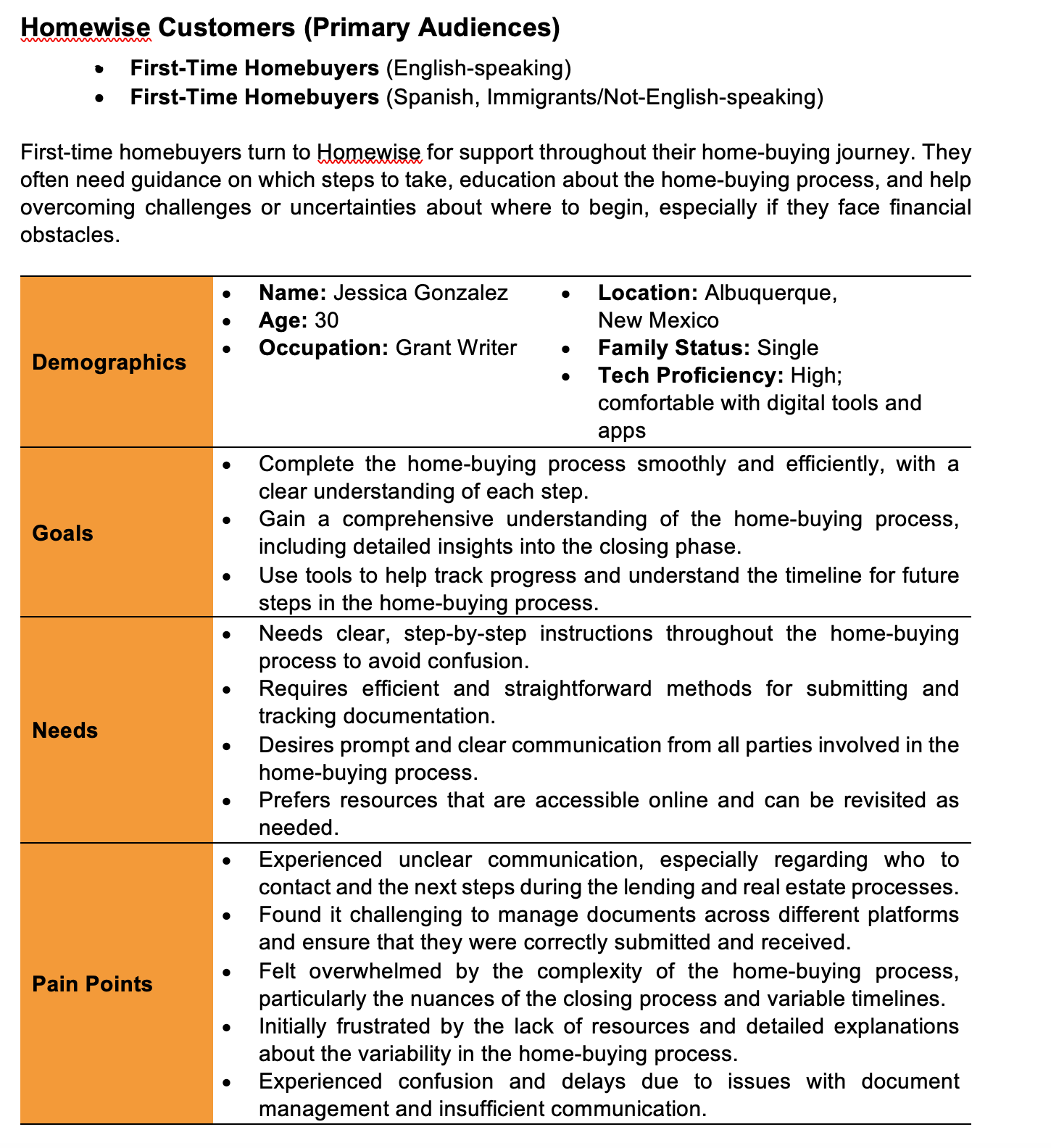
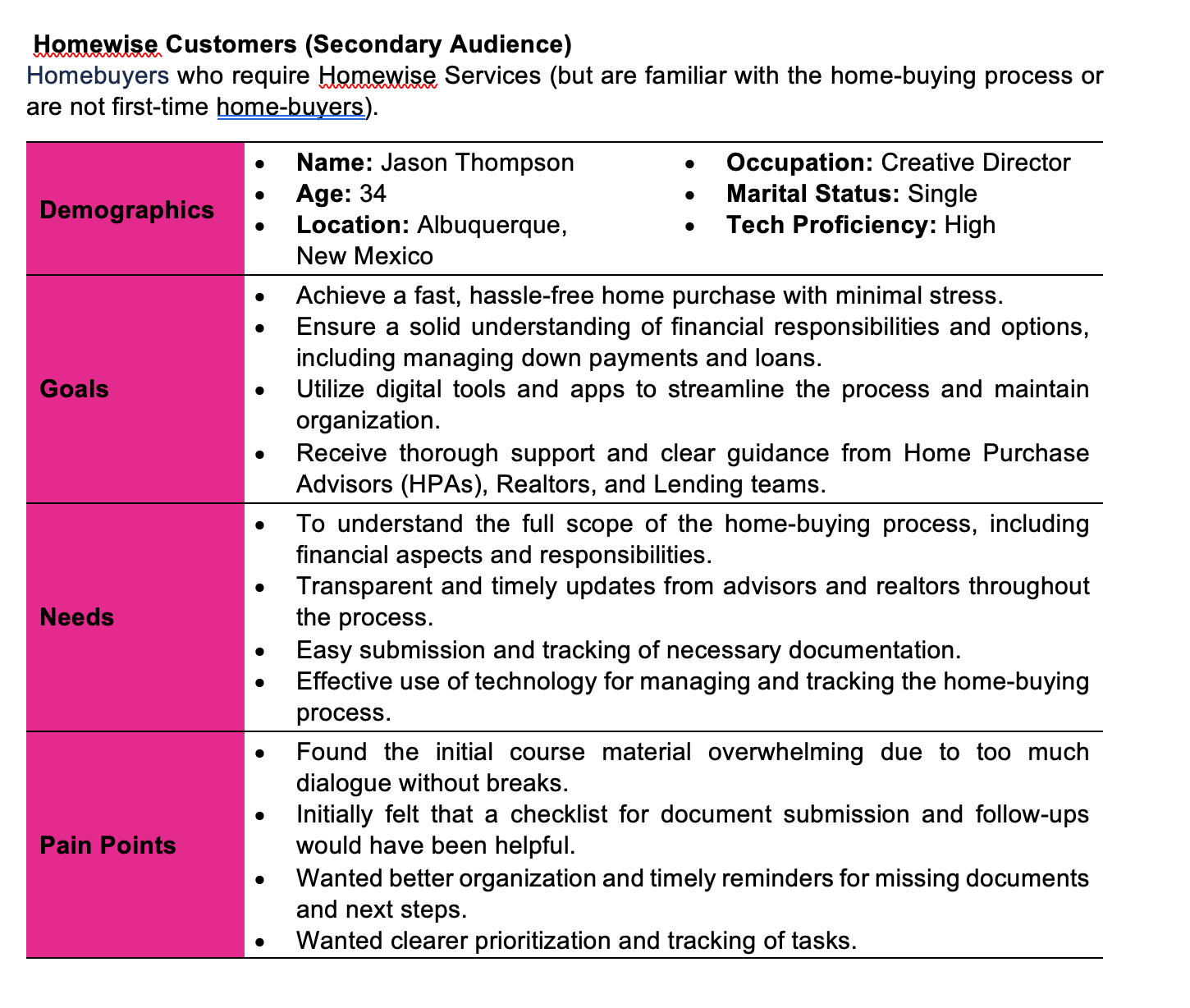
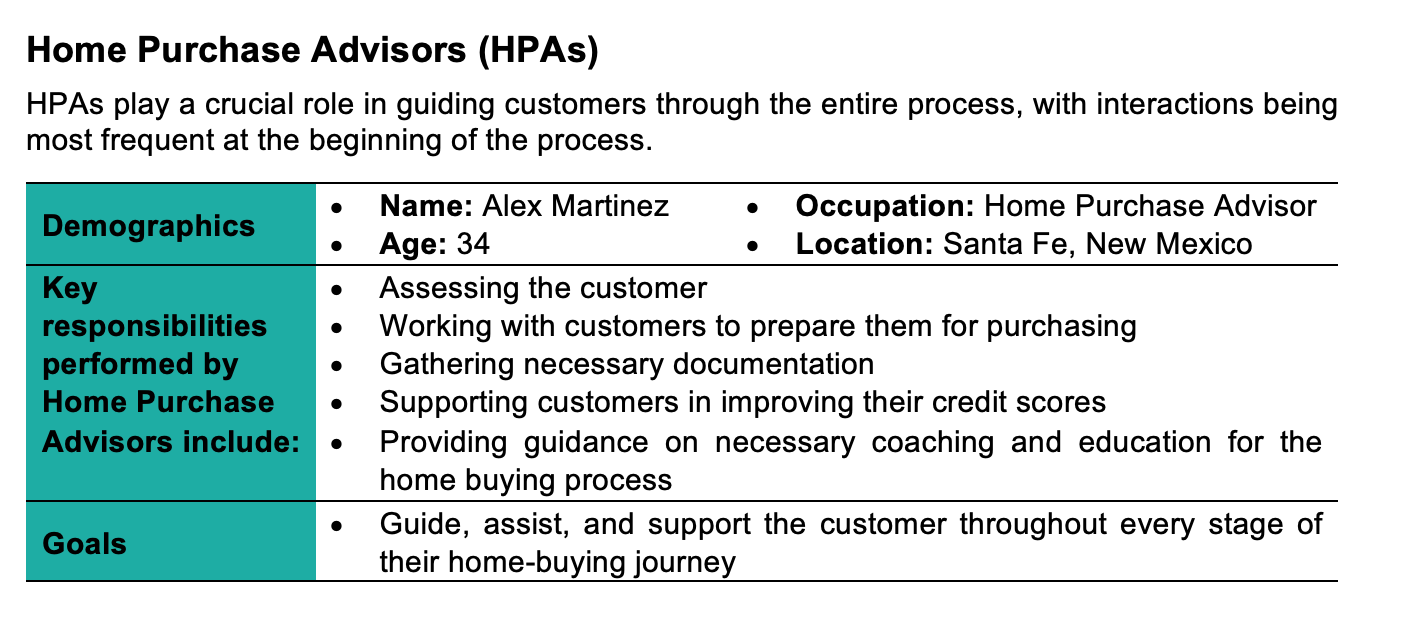
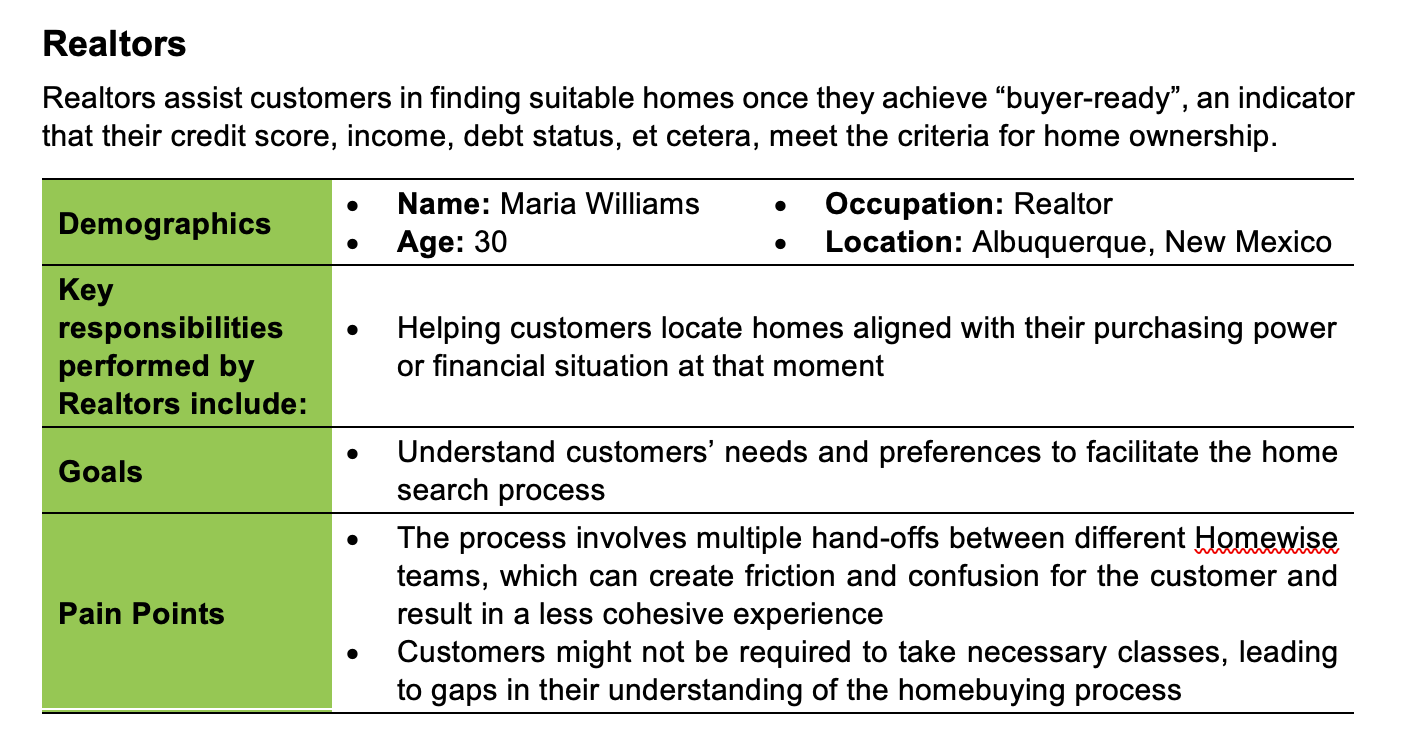
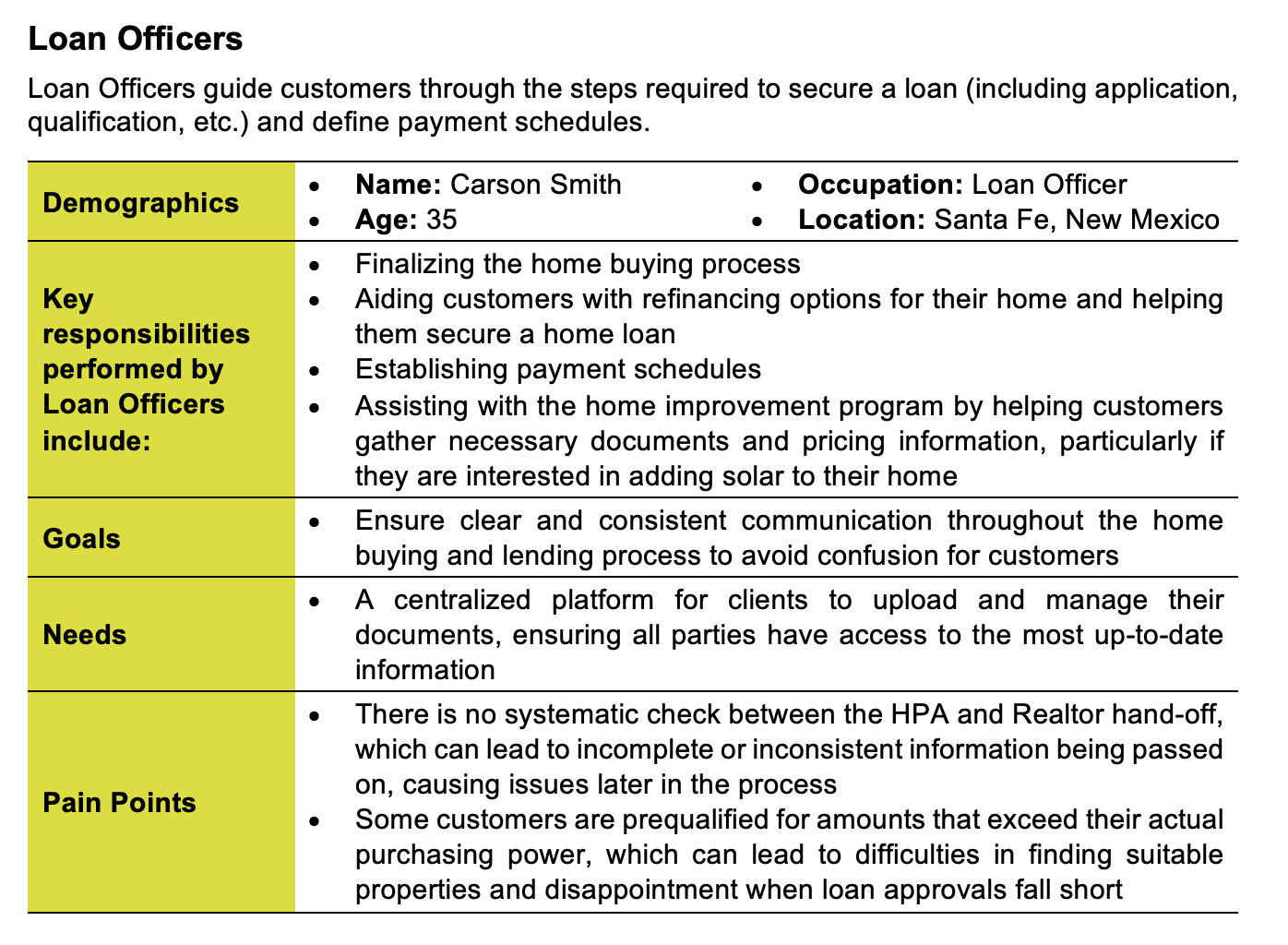
Our research helped us develop personas representing different customer experiences and needs throughout the homeownership process.
Two important perspectives were first-time homebuyers and Spanish-speaking customers. These personas helped us consider how a future digital experience could support different levels of familiarity with the process, information needs, and communication preferences.
How the personas informed our approach
The personas reinforced the importance of considering accessibility, communication, and customer guidance throughout the journey.
Rather than assuming every customer would interact with the platform in the same way, we considered how different needs could influence future product requirements.
06 - RESEARCH FINDINGS
Uncovering friction across the customer experience
Through stakeholder discussions, customer interviews, and internal discovery, our team identified eight experience pain points.
These findings provided a clearer understanding of the challenges a future digital solution would need to address and helped connect customer needs with organizational requirements.
Experience pain points identified

Why these findings mattered
The discovery work gave the team a research-informed basis for discussing improvements. It also helped ensure that future technology decisions would consider customer experience needs alongside internal business requirements.
07 - TRANSLATING INSIGHTS INTO PRODUCT OPPORTUNITIES
From user needs to actionable requirements
A central part of the discovery process was connecting what we learned from customers and stakeholders to capabilities that a future digital platform might need to support.
The following matrix illustrates how the research themes could be translated into product opportunities.

The product discovery connection
Research findings helped frame the capabilities, experience considerations, and business requirements that could guide the evaluation of technology solutions.
08 - EVALUATING TECHNOLOGY SOLUTIONS
Choosing technology based on user and business needs
With a clearer understanding of the customer journey and internal requirements, the team explored three potential technology approaches: Salesforce Experience Cloud, Salesforce Lightning, and a custom-built solution.

Evaluation considerations
The research helped frame discussions about usability, accessibility, operational requirements, integration, flexibility, and long-term maintainability.
The objective was to understand which approach could best support the experience Homewise wanted to provide, rather than selecting technology without first establishing customer needs.

09 - OUTCOMES AND DELIVERABLES
Creating a foundation for informed product decisions
At the conclusion of the six-week discovery engagement, the team had a clearer understanding of customer needs, operational considerations, and opportunities for improving Homewise's digital experience.

These deliverables helped establish a research-informed foundation for future digital product decisions. The engagement focused on discovery and recommendations; post-launch performance improvements were not measured as part of this work.
10 - REFLECTION
What I learned
Homewise reinforced the importance of understanding the entire customer experience before defining a digital solution.
Working across customer research, stakeholder discovery, and technology evaluation helped me see how UX research can influence broader product and business decisions.
Three lessons stood out: